A quality filing cabinet is the backbone of any organized home office. While metal and plastic options exist, a wood filing cabinet brings warmth, durability, and timeless appeal to your workspace, plus it blends seamlessly with existing furniture. Whether you’re working from home full-time or managing household documents, choosing the right wooden filing cabinet means balancing style with function. This guide walks you through everything you need to know: from understanding different cabinet styles and wood types to selecting dimensions that fit your space and organizing strategies that keep your paperwork accessible. By the end, you’ll have the confidence to pick a filing cabinet that works as hard as you do.
Table of Contents
ToggleKey Takeaways
- A wood filing cabinet offers superior durability, aesthetic appeal, and sound dampening compared to metal and plastic alternatives, making it a worthwhile investment for long-term home office organization.
- Choose between vertical cabinets for space-saving corner placement or lateral wood filing cabinets for easier access to multiple files simultaneously—your workflow and room dimensions should guide the decision.
- Hardwoods like oak, cherry, maple, and walnut resist warping better than particleboard; prioritize full-extension ball-bearing drawer slides and protective polyurethane or lacquer finishes for years of reliable performance.
- Match your wood filing cabinet finish to existing office furniture and ensure ideal filing height between waist and mid-chest to reduce strain and improve accessibility throughout your workday.
- Regular maintenance—including quarterly drawer vacuuming, paste wax on slides, and humidity control—extends your cabinet’s lifespan and prevents drawer sticking, color fading, and wood warping.
- Organize documents using hanging file folders with clear labels, separated by category, to maximize retrieval speed and keep your filing cabinet functional rather than cluttered.
Why Choose A Wood Filing Cabinet Over Metal or Plastic Alternatives
Wood filing cabinets offer several advantages that make them worth the investment. Unlike metal cabinets, which can look institutional and rust if moisture creeps in, wood ages gracefully and integrates with home décor naturally. Plastic alternatives are affordable but tend to warp under heavy load and look cheap in professional settings.
Wooden cabinets provide superior durability when properly finished. Quality hardwoods like oak, cherry, and maple resist warping, shrinking, and day-to-day wear far better than particleboard or MDF. They also dampen sound better than metal, which means file drawers close with a soft thud rather than a jarring clang. And here’s the honest truth: if you ever need to sell your home or refinance, a filing cabinet wood finish that coordinates with your décor adds perceived value to your home office in ways plastic never will.
One trade-off: wooden cabinets typically cost more upfront and require occasional maintenance (like refinishing or checking for finish cracks). But if you’re planning to keep your home office organized for years, not months, the initial investment pays dividends.
Types of Wood Filing Cabinets and Their Best Uses
Wood filing cabinets come in two main styles, each suited to different spaces and workflows.
Vertical vs. Lateral Filing Cabinet Styles
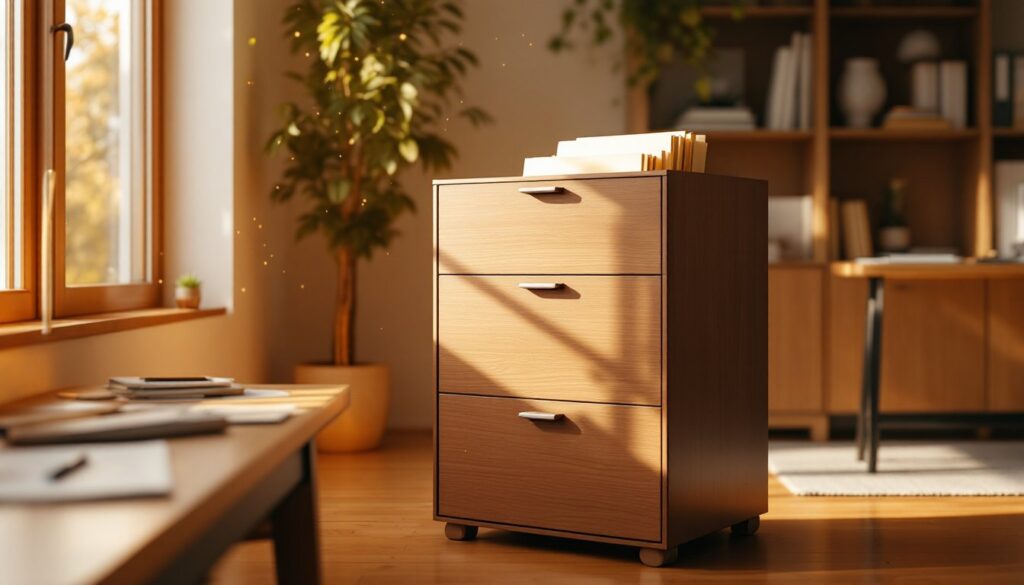
Vertical filing cabinets are tall and narrow, with drawers that open toward you. Folders are filed front-to-back, taking up less floorspace but requiring you to reach deeper into the drawer. They’re ideal for small offices or when wall space is at a premium. A typical vertical wood filing cabinet stands about 52 inches tall and occupies roughly 18 inches of depth.
Lateral filing cabinets are wider and shorter, with side-to-side drawer access. Folders stand vertically along the width of the drawer, so you see more files at once and rarely reach beyond arm’s length. They need more floorspace but feel less cramped and are better for busy workflows where you’re pulling files frequently. Most lateral models run 36 to 48 inches wide and 18 to 20 inches deep.
Choose vertical if you have a corner nook or limited floor area. Go lateral if you work with multiple files simultaneously or have a dedicated office wall. Many DIY enthusiasts also build custom wooden filing cabinet designs using free DIY furniture plans and basic woodworking tools, a viable option if you want exact dimensions or a specific wood species.
Key Features and Dimensions to Consider Before Buying
Before clicking “buy” or visiting a showroom, nail down these specifications.
Drawer Capacity and Depth: A four-drawer vertical cabinet holds roughly 10,000 to 12,000 sheets of standard letter-size documents. If you file legal-size papers (8.5″ × 14″), you’ll need wider drawers or a lateral model. Check the stated weight capacity per drawer, most quality wood cabinets support 100 to 150 pounds distributed evenly, but overloading ruins the slides and warps the wood.
Drawer Slides and Locks: Full-extension slides let you pull drawers completely out, making it easier to grab files in the back. Ball-bearing slides (not friction or felt) glide smoothly and last longer. A key lock on the top drawer is standard for securing sensitive documents.
Height and Accessibility: Measure your wall height and account for baseboards. The ideal filing height is between your waist and mid-chest, too high and you’ll strain reaching, too low and you’re bending constantly. A lateral wood filing cabinet at 28 to 32 inches tall works well under most desks: a four-drawer vertical sits around 52 inches.
Finish and Stain: Solid wood cabinets (using real hardwood veneer or solid wood) hold their value longer than veneered MDF. If the specification says “wood-grain laminate,” that’s plastic, skip it for a workspace where durability matters.
How to Select the Right Wood Type and Finish for Your Space
The wood species you choose affects both appearance and lifespan. Oak is hardwearing and takes stain well, showing bold grain patterns. Cherry and mahogany deliver richer, warmer tones and are slightly denser. Maple is pale and fine-grained, ideal if you prefer a modern or light aesthetic. Walnut is expensive but stunning and ages beautifully.
For a home office, match the wood tone to your existing desk, bookshelf, or wall color. If your space leans traditional, a cherry filing cabinet wood finish anchors the room. Modern spaces often pair better with light maple or white oak.
Finish matters as much as species. A polyurethane or lacquer topcoat protects against dust, moisture, and minor scratches, critical in a lived-in home where humidity fluctuates. Matte finishes hide fingerprints better than gloss, though they scratch more easily. If you’re considering a custom wooden filing cabinet build, woodworking project plans show how to stain and seal properly: most beginners underestimate the importance of a second or third coat of finish.
Test samples if possible. Office lighting makes stain color look different than showroom samples. Bring fabric or paint chips from your office to compare side-by-side.
Organizing and Maintaining Your Wood Filing Cabinet
A well-organized cabinet is worth more than a fancy one collecting junk. Use hanging file folders inside drawers, they prevent documents from sliding around and make file retrieval faster. Label everything clearly with a label maker (far neater than handwriting). Group files by category: taxes, insurance, medical, household maintenance, warranties. Separate active files (things you reference monthly) from archive storage (keep separately, maybe in a lower drawer or off-site).
Maintenance keeps your wooden filing cabinet functional for decades. Dust the exterior monthly with a soft cloth: vacuum inside drawers quarterly to prevent buildup. Avoid placing the cabinet in direct sunlight, which fades wood finish and causes uneven color shifts. If you notice the drawer sticking, first check for loose items jamming the track. A tiny application of paste wax on the slides (not spray lubricant, it attracts dust) restores smooth operation.
If the finish develops surface cracks or loses its luster after years, a light sanding and fresh topcoat refreshes it without a complete refinish. Beginner woodworking projects often cover refinishing basics, worth learning if you plan to keep your cabinet long-term. Don’t ignore humidity: if your office feels very dry in winter or damp in summer, add a small humidifier or dehumidifier to stabilize the wood and prevent cupping or warping.
Conclusion
A wood filing cabinet is more than storage, it’s an investment in your home office’s organization and aesthetic. Whether you buy a finished piece, assemble a flat-pack, or build a custom wooden filing cabinet from scratch, choosing solid wood, the right dimensions, and a finish that matches your décor ensures years of reliable use. Measure your space, know your file volume, and don’t skimp on drawer slides or final finish. Your future self will thank you every time a file pulls out smoothly and your documents stay protected.