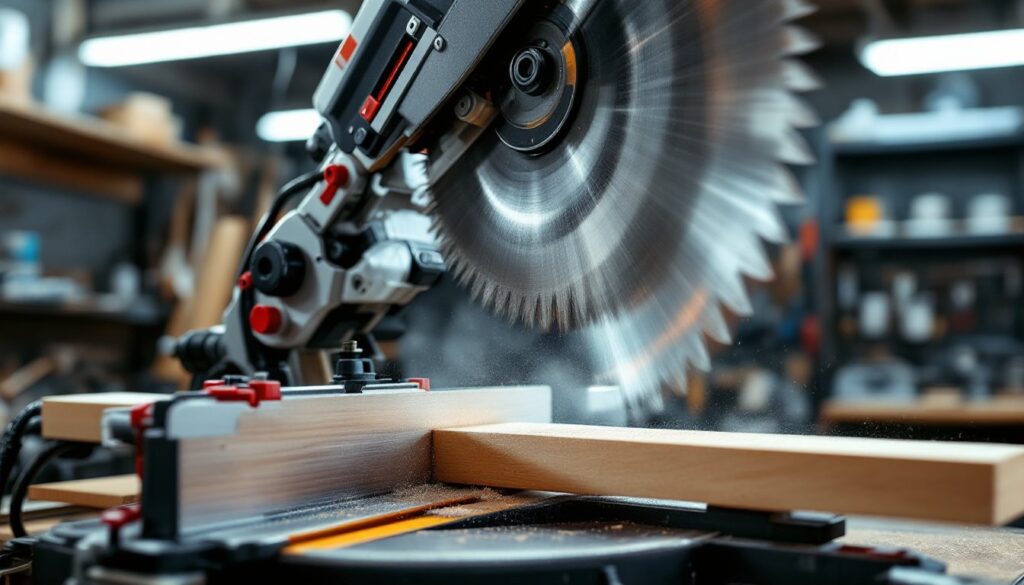
A miter saw is one of the most versatile tools in the DIYer’s arsenal, and once you understand what a miter saw does, you’ll wonder how you ever completed projects without one. At its core, a miter saw is a power tool designed to make precise angled and crosscuts in wood, delivering results that handheld saws simply can’t match. Whether you’re framing door openings, cutting crown molding, building raised garden beds, or tackling furniture projects, a miter saw transforms rough work into professional-looking cuts. If you’ve been considering adding one to your shop but aren’t sure what makes it different from a circular saw or table saw, this guide will walk you through everything you need to know.
Table of Contents
ToggleKey Takeaways
- A miter saw is a stationary power tool that excels at making precise crosscuts and angled cuts, delivering professional results that handheld or circular saws cannot match.
- The key advantage of a miter saw is its speed and repeatability—lock your fence and angle settings once, and every subsequent cut comes out identical, making it essential for trim work and framing.
- Miter saws come in four main types: standard ($150–$400), compound ($300–$600), sliding ($400–$900), and dual-compound ($600+), so choose based on your most common project needs.
- A miter saw is ideal for finish carpentry projects like baseboards and crown molding, framing work, and woodworking applications such as decks and raised garden beds.
- Always prioritize safety by wearing eye and hearing protection, securing your workpiece against the fence, keeping hands away from the blade, and using dust collection to protect your health.
Understanding the Basics: What a Miter Saw Does
A miter saw is fundamentally a stationary cutting tool that holds your workpiece firmly while a rotating blade makes the cut. Unlike a circular saw you push through material, a miter saw pulls a blade down and through the wood in one smooth motion. This design gives you superior control and consistency, especially when you’re making repeated cuts or tight angle cuts.
The tool excels at crosscutting (cutting wood perpendicular to the grain) and angle cutting. You rotate the blade assembly on a base platform to cut miters, angled cuts typically at 45 degrees, without moving the workpiece. This is why it’s called a miter saw. For baseboards, crown molding, picture frames, or any trim work, a miter saw is hard to beat because the blade stays stationary while the base tilts, keeping your cut edge crisp and clean.
What sets a miter saw apart from other tools is its speed and repeatability. Make one accurate cut, lock your fence and angle settings, and every subsequent piece comes out identical. That’s invaluable when you’re cutting 20 pieces of trim or framing lumber to the same length. A comprehensive guide to miter saws explains that precision is one of the primary reasons contractors and serious DIYers rely on this tool for everything from finish carpentry to structural framing.
Key Components and How They Work Together
The Blade and Motor System
The blade is the heart of the miter saw. Most DIY models use a 10-inch blade, though 12-inch versions exist for heavier work. The blade rotates at high speed (typically 3,000 to 5,000 RPM) and is oriented vertically, pulling downward through the wood. A kerf (the width of material removed by the cut) is usually 1/8 inch for standard blades, which matters when you’re layout your trim or accounting for waste.
The motor sits above the base platform and powers the blade through a system of pulleys and belts. When you pull the handle down, it engages the blade and brings it into contact with the wood. The motor does the heavy lifting, you just control the angle and pressure. Quality matters here: brushless motors run cooler and last longer than brushed motors, though they cost more upfront.
The Fence and Base Platform
The fence is a straight vertical guide that holds your workpiece snug against the base. It prevents the wood from shifting during the cut and keeps your measurements accurate. Most fences have a lip on top and a flat face: your workpiece rests on the base platform and leans against the fence face.
The base platform is where everything locks in place. It tilts left and right (usually ±45 degrees) to set your miter angle, and the entire blade head rotates side to side for bevel cuts or compound angles. Locking mechanisms (usually red knobs or levers) hold each adjustment solid. Sloppy locks mean sloppy cuts, so invest in a tool with sturdy locking hardware. Understanding how these components work together helps you set up accurately and troubleshoot when cuts aren’t landing where you expect.
Types of Miter Saws: Choosing the Right One for Your Projects
Standard miter saws handle most jobs, crosscutting and miter cuts at various angles. They’re the workhorse for trim, framing lumber, and general carpentry. A 10-inch standard miter saw costs $150–$400 and handles stock up to about 6 inches wide comfortably.
A compound miter saw tilts the blade assembly both left and right and tilts the base, letting you cut compound angles in a single pass. This matters for crown molding, where the angle of the miter and bevel must align. Expect to pay $300–$600 for a quality compound saw.
Sliding miter saws have the blade on a track that extends forward, letting you crosscut wider boards (up to 12 inches or more) without multiple flips. They’re heavier, bulkier, and pricier ($400–$900), but essential if you regularly work with dimensional lumber or wide panels.
Dual-compound miter saws combine sliding rails with compound tilting, offering maximum flexibility. These are professional-grade tools ($600+) and overkill for most DIYers unless you’re running a finish carpentry operation. Start with a standard or compound miter saw based on your most common cuts. If you’re mostly cutting trim and framing stock under 6 inches wide, a standard saw is plenty. If crown molding and complex angles are in your future, go compound.
Common Uses and Project Applications
Miter saws shine on finish carpentry. Baseboards, crown molding, picture frames, and trim boards all demand clean angled cuts at various angles. The tool’s repeatability means when you’re installing trim around a whole room, every piece looks uniform.
Framing is another core use. Cutting studs, top plates, and blocking to length is fast and accurate with a miter saw. A 2×4 crosscut takes seconds, and your cuts stay square because the blade pulls straight down. Many contractors run a miter saw on site for in-frame measurements rather than pre-cutting everything.
Woodworking projects benefit from the precision. Building a deck, constructing a raised garden bed, or assembling shelving all rely on square crosscuts. Angle cuts for drawer fronts, decorative joints, or roof pitches are quick to set up and repeat.
You can also use a miter saw for cutting tile, composite materials, and even PVC trim, depending on the blade and material. Always swap in the correct blade, a masonry blade for tile, a fine-tooth blade for plastic, and wear a dust mask or use a vacuum attachment. DIY repair tutorials and woodworking projects demonstrate how different tools, including miter saws, tackle specific cuts and materials. The tool’s versatility makes it invaluable across dozens of projects.
Safety Considerations and Best Practices
Always wear safety glasses when using a miter saw, dust and splinters travel fast. Hearing protection is essential since the saw produces 80–90 decibels. Work gloves help when handling rough lumber, but remove them before pulling the trigger, loose fabric can catch the blade.
Never reach under the blade while it’s running or immediately after. The blade coasts to a stop: wait until it’s fully motionless before removing your workpiece. Keep hands at least 6 inches away from the blade path, and never force the blade through material, let the motor do the work.
Always secure your workpiece against the fence. A piece that shifts mid-cut can jam and throw the workpiece or cause binding. Use clamps for shorter pieces if you can’t hold them safely by hand. For long boards, position yourself to the side, not directly behind the blade, if the piece kicks, you don’t want it in your chest.
Make sure the work surface is stable and level. A wobbly base leads to inaccurate cuts and safety hazards. Keep the area around your saw clear of tripping hazards and debris. Check the blade before each session for cracks or missing teeth: a damaged blade is a safety risk and produces poor cuts.
Use a dust collection bag or shop vacuum. Aside from keeping your shop clean, dust inhalation over time causes respiratory issues. Finally, unplug the saw when you’re changing blades or making adjustments. A moment of carelessness can turn a tool into a weapon, respect the machinery and work deliberately.