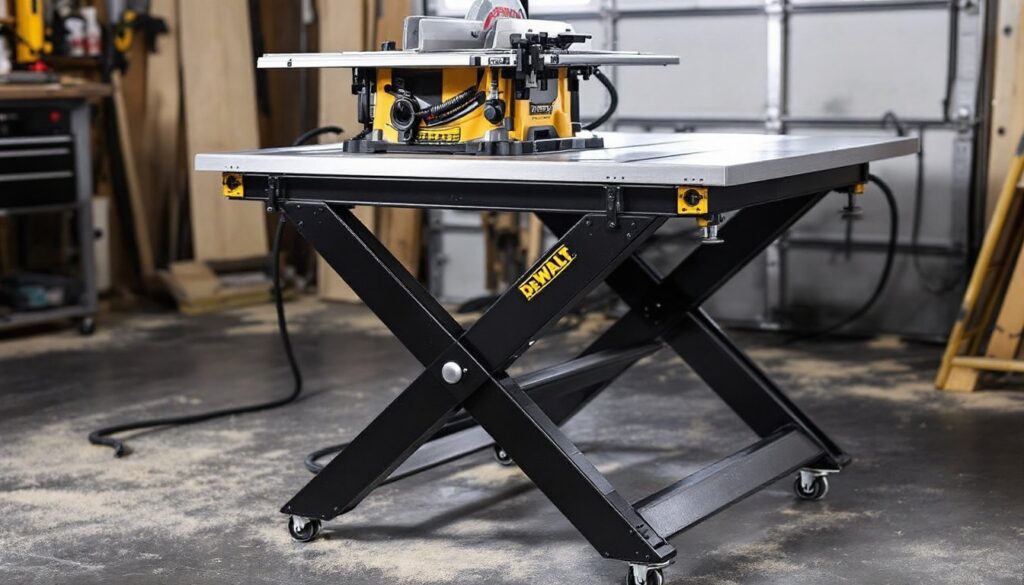
A stationary table saw without a stand is just expensive deadweight in your garage. DeWalt table saw stands transform a powerful tool into a mobile, stable powerhouse, whether you’re a hobbyist building deck stairs or a contractor moving between job sites. A quality stand handles the weight, absorbs vibration, and keeps your saw at the right height for safe, accurate cuts. This guide walks you through what to look for, which models work best for homeowners, and how to set one up so it actually stays where you put it.
Table of Contents
ToggleKey Takeaways
- A DeWalt table saw stand provides mobility, vibration isolation, and ergonomic safety by positioning your saw at elbow height and enabling smooth movement between projects.
- When selecting a stand, verify compatibility with your saw model, confirm the weight capacity exceeds your saw’s weight by a significant margin, and decide whether portability features like folding matter for your workspace.
- Proper assembly is critical: follow the manual completely, use all included fasteners with lock washers, level the saw front-to-back and side-to-side, and test the caster brakes to ensure they lock all four wheels simultaneously.
- Quarterly lubrication of casters and adjustment mechanisms, seasonal bolt checks, and regular inspection of wheels prevent maintenance issues and extend your stand’s lifespan by a decade or more.
- A quality DeWalt table saw stand costs $200–$400 and eliminates the need for custom-built bases, making it a cost-effective alternative to hours of design and fabrication work.
What Is a DeWalt Table Saw Stand and Why You Need One
A table saw stand is a wheeled frame engineered to hold a table saw at working height while distributing its weight evenly and allowing movement across a workshop or job site. DeWalt stands are built specifically for DeWalt saws, so the footprint, fastening points, and weight rating align with their tools.
The basic appeal is mobility. A table saw alone weighs 80–200 pounds depending on the model, and lugging it between projects gets old fast. A stand with locking casters lets you wheel it where you need it, then lock it down for safe operation. But there’s more to it than just portability.
Key Benefits for Your Workshop Setup
Vibration Isolation plays a bigger role than many DIYers realize. A saw bolted directly to a flimsy bench chatters, wanders off line, and wears out the motor faster. A sturdy stand dampens that vibration, keeps your blade tracking true, and extends tool life.
Ergonomics and safety aren’t small talk either. A well-designed stand puts the blade at elbow height, reducing fatigue and keeping your hands in the safest possible zone. You’re not reaching up or hunching over, both of which invite accidents. The stand also creates clearance underneath, so long workpieces can pass through without binding on a cabinet or base.
Storage and footprint efficiency matter in real workshops. A stand takes up no more floor space than the saw itself, yet gives you a roll-away solution that beats a 4×8 sheet of plywood leaning against the wall. When you’re not using it, wheel it into a corner or a storage bay.
Cost-effectiveness might surprise you. A solid DeWalt stand runs $200–$400, which sounds like a lot until you realize you’re avoiding a custom-built base that takes hours to design and build safely. The engineering is already done: you just assemble it.
Popular DeWalt Table Saw Stand Models for Homeowners
DeWalt manufactures several stand models tailored to different saw sizes and workspace needs. The most common models for homeowners are the compact and medium-duty ranges.
The DWE7491RS is a rolling stand purpose-built for the DWE7491 10-inch job site saw. It features 36-inch maximum rip capacity, folds for transport, and includes a dust collection port. It’s lighter than a full cabinet stand but still rigid enough for accurate crosscuts and rip work. The fold-down design makes it popular with contractors and serious hobbyists who move between projects.
The DWE7480 saw pairs well with the DWE7480T1 stand, which is simpler and more affordable. This is a pure roll-stand, no folding, no frills, but it locks solid and handles the weight without flex. If you’re setting up a permanent workshop corner, this is a smart pick.
For larger professional-grade saws like the DWE7491RS or cabinet models, standalone stands are less common: instead, builders often choose a base cabinet from DeWalt or adapt a universal industrial stand. The key is checking the weight rating and fastening pattern against your specific saw model.
When shopping, confirm three things: the saw model your stand fits, the weight capacity (always buy above your saw’s stated weight), and whether folding/portability matters to you. A stand rated for 500 pounds will handle a 250-pound saw with room to spare, that cushion protects against tipping if you bump it or load unbalanced workpieces.
Setting Up Your DeWalt Table Saw Stand Correctly
Right out of the box, a stand is a pile of components. Do it right the first time so you don’t have to disassemble and rebuild it later.
Assembly and Installation Tips
Read the manual completely before opening a single wrench. I know it sounds obvious, but most assembly mistakes come from skipping ahead. DeWalt manuals are thorough and include fastener specs, torque specs for critical bolts, and a parts diagram. Lay out all components on a clean floor first.
Use the correct fasteners. DeWalt includes bolts, washers, and lock washers for a reason. Lock washers prevent vibration from loosening bolts over time. Don’t substitute smaller hardware or skip them, this is not a place to improvise. Tighten bolts in a cross pattern (like a tire rotation) to avoid racking the frame.
Confirm the saw sits flush and level. After mounting the saw to the stand, use a torpedo level on both the blade and the table surface front-to-back and side-to-side. A tilted saw will bind during cuts and pull the workpiece toward the fence. If the stand isn’t level, shim it with steel shims under the feet, not wood, which compresses over time.
Test the casters and locking mechanism before moving. Roll the stand a few feet and lock the brakes firmly. Push hard on the saw table to confirm it doesn’t shift. The brakes should lock all four wheels simultaneously: if one wheel slips, the stand will want to pivot when you’re cutting.
Adjust fence alignment after assembly. Even a perfect stand doesn’t guarantee fence-to-blade parallelism. Use a Wixey digital caliper or a tape measure to check the distance from the blade to the fence at the front and back. It should be identical. If it drifts, your cross-grain cuts will bind. This is covered in your saw manual but bears repeating because it’s so commonly missed.
Double-check blade height and angle mechanics. Spin the blade by hand to confirm it doesn’t contact the table or fence. Check that the height and angle adjustment wheels spin smoothly. Binding here means the adjustment hardware got misaligned during assembly, fix it now, not mid-project.
Maintaining Your Stand for Long-Term Use
A stand is simple, but neglect kills it just like any other workshop fixture. Smart maintenance keeps it safe and accurate for years.
Lubricate moving parts quarterly. The caster wheels, height adjustment wheels, and angle adjustment mechanism benefit from a light spray of 3-in-1 oil or equivalent. Don’t soak them, a small squirt in each joint is enough. This reduces drag and keeps adjustments smooth.
Check bolts and fasteners seasonally. Vibration from cutting loosens bolts. Every three months of regular use, go through the stand with a wrench and snug any that have backed off. Focus on the saw mounting bolts, the brace connections, and the caster hardware. You’ll usually find at least one that needs a quarter-turn.
Inspect casters for damage or worn bearings. A wobbly wheel doesn’t just make rolling annoying, it throws the entire stand out of plumb. If a caster wheel is flat-spotted, cracked, or spins roughly, replace it before it causes binding or tipping. DeWalt sells replacement caster kits: they’re cheap insurance.
Protect the stand from moisture. If your workshop is damp or you’re storing the stand outdoors temporarily, wipe it down and consider a light coat of paste wax on metal surfaces. Rust will lock up adjustment mechanisms and corrode fasteners, turning a $300 stand into scrap.
Keep the dust collection port clear. Sawdust buildup in the port restricts airflow and can cause chips to be ejected downward into the stand frame. Clean it weekly if you’re running a lot of material through the saw. A shop vac connected to the saw’s dust port pulls most of it away, but some will still accumulate in the stand base.
These steps take 15 minutes a month and easily extend stand life by a decade. By contrast, ignoring maintenance usually ends in a caster seizing mid-project or bolts backing out far enough to cause dangerous table wobble. Not worth the risk.
Conclusion
A DeWalt table saw stand isn’t glamorous, but it’s one of the smartest workshop investments a homeowner can make. It turns a stationary tool into a mobile one, keeps your cuts accurate, and saves your back. Take time during assembly to get it level and tight, lock the brakes before you cut, and keep up with basic maintenance. Your future projects will be faster and safer because of it. For more detailed guidance on workshop setup and tool reviews, resources like This Old House and Today’s Homeowner offer excellent tool recommendations and shop organization strategies.