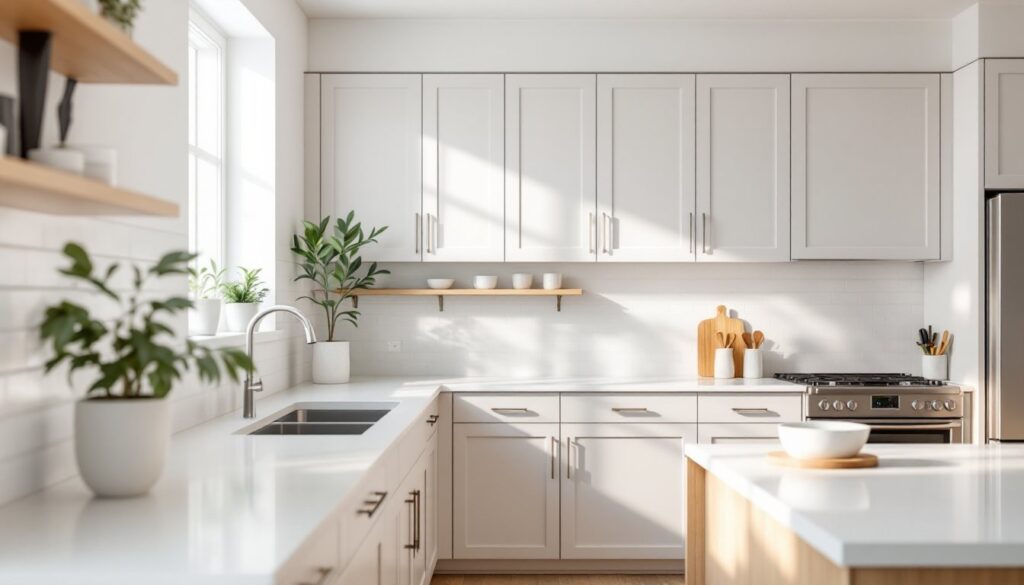
Flat panel kitchen cabinets have become the go-to choice for homeowners who want a sleek, modern look without the fuss of ornate detailing. If you’re eyeing a kitchen refresh or full remodel, understanding what flat panels are, and whether they fit your space and budget, matters before you commit. This guide walks you through the fundamentals, design options, and practical installation tips so you can make an well-informed choice and tackle this project with confidence.
Table of Contents
ToggleKey Takeaways
- Flat panel kitchen cabinets offer a modern, minimalist aesthetic with clean lines that are easier to maintain and clean than ornate raised panel alternatives.
- Stock flat panel cabinet doors are budget-friendly, ranging from $40–$80 for white MDF and $100–$200 for solid wood, making kitchen refreshes feasible for under $500 when refacing existing cabinets.
- Proper surface preparation—including 150-grit and 220-grit sanding, TSP cleaning, and bonding primer application—is essential to ensure paint adhesion and prevent peeling on flat panel cabinets.
- Flat panel cabinet designs work beautifully with handleless pulls, minimal bar hardware, and finishes ranging from high-gloss white to matte black, natural wood stains, and modern gray or navy tones.
- DIY homeowners can install new flat panel cabinet doors in a weekend by carefully measuring openings, ordering physical samples first, and taking time to align hinges and ensure even gaps for a professional look.
- Thicker cabinet doors (1.5 inches) feel more substantial and expensive, while thin veneered panels (0.75 inches) offer a lighter, budget-conscious appearance that affects both aesthetics and interior cabinet space.
What Are Flat Panel Kitchen Cabinets?
A flat panel cabinet door is exactly what the name implies: a single, flat sheet of material with no routed edges, moldings, or recessed center panels. The door consists of a solid frame and a flat, flush surface, typically plywood, MDF (medium-density fiberboard), or solid wood veneer. This minimalist design contrasts with raised panel doors, which feature a decorative recessed or raised center section.
Flat panels come in various materials and finishes. Veneer flat panels (plywood with wood veneer glued to the surface) offer wood grain at a lower cost than solid wood. MDF flat panels provide excellent paint adhesion and dimensional stability, making them ideal for glossy or matte finishes. Solid wood flat panels (typically hardwoods like oak, maple, or cherry) deliver authenticity and longevity but cost more.
The appeal is straightforward: clean lines, easier to clean, faster to paint or stain, and a contemporary aesthetic that pairs well with modern kitchens. They’re also forgiving for DIY painters because the flat surface has no crevices where paint can pool or drip.
Why Flat Panel Cabinets Are Popular Today
Flat panel cabinets align with current design trends emphasizing minimalism and functionality. Kitchens have shifted away from ornate cabinetry toward clean, handleless designs and neutral palettes. Flat panels are the foundation for that look, and they pair naturally with soft-close hinges, integrated appliances, and linear hardware.
Beyond aesthetics, they’re practical. Unlike raised panels, which trap dust and crumbs in their grooves, flat panels wipe clean in seconds. A damp cloth and mild soap is usually all you need. In a high-traffic kitchen, that daily maintenance difference adds up fast.
Flat panels also adapt to nearly any finish. Paint them gloss white for Scandinavian minimalism, matte black for industrial edge, or warm wood stain for transitional style. Resources like The Kitchn regularly showcase flat panel cabinets in diverse kitchen designs, proving their versatility across budgets and aesthetics.
Budget-Friendly Installation
If you’re refacing existing cabinets rather than replacing them entirely, flat panel doors are your most cost-effective refresh. Stock flat panel doors are widely available from suppliers like Home Depot, Lowe’s, and specialty cabinet shops. A typical pre-made 24-inch-wide flat panel door in white MDF runs $40–$80 per door: solid wood equivalents run $100–$200.
Labor is simpler too. A handy homeowner with basic tools can remove old doors, install new hinges, and hang replacements in a weekend. No fancy routing or trim work required. If you’re painting existing flat panels, primer and two coats of semi-gloss or satin cabinet paint costs $30–$60 per gallon (covering roughly 300–400 square feet), making a full cabinet refresh feasible for under $500 in many cases.
Professional installation, if you go that route, runs $50–$150 per hour depending on your region and contractor experience. Prepping and painting 20 doors yourself versus hiring out can save $800–$2,000.
Comparing Flat Panel vs. Raised Panel Cabinets
Raised panel doors feature a recessed or raised center panel bordered by a frame. They look traditional, elegant, and more expensive, which they often are. The extra routing and assembly time make raised panels 20–40% pricier than flat panel equivalents.
Flat panels are simpler to manufacture, ship, and install. A flat panel weighs less, so hinges and cabinet frames experience less strain. Raised panels, especially in solid wood, can twist or warp over time if humidity fluctuates, because wood movement is greater around the large center panel. Flat panels, being simpler, are more dimensionally stable.
Raised panels hide scratches better because their texture disguises blemishes. Flat panels show every fingerprint and dust mark until you wipe them, a trade-off for their easy-clean nature. Aesthetically, raised panels feel traditional and formal: flat panels read modern and clean. Neither is objectively “better”, it depends on your home’s style and your patience for maintenance.
If you prefer a softer, transitional look that borrows from both worlds, consider shaker-style flat panels, which feature a simple frame and flat inset. They’re modern enough for contemporary kitchens but warm enough for farmhouse or cottage aesthetics.
Design and Style Options for Flat Panel Cabinets
Flat panel cabinets are a blank canvas. The real design work happens in finish and hardware.
Finish options range from bold to understated. High-gloss white or black flat panels suit modern and minimalist kitchens. Matte finishes (flat or satin) feel more relaxed and hide fingerprints better than gloss. Natural wood stains, light oak, walnut, or cherry, work well in transitional and rustic-modern spaces. Gray and navy tones are current, bridging neutral and bold.
Hardware choices matter enormously. Flat panels work beautifully with handleless or integrated pull designs (the door pulls from a routed groove along the edge). For traditional hardware, minimal bar pulls or cup pulls in brushed nickel or matte black keep the aesthetic clean. Ornate knobs feel out of place on flat panels and clutter the visual simplicity.
Door thickness affects the overall look. A thicker door (1.5 inches) feels more substantial and expensive: thin veneered panels (0.75 inches) look lighter and more budget-conscious. Most stock cabinets sit at 0.75–1 inch. This choice also affects your cabinet’s internal space, thicker doors slightly reduce the opening.
Design inspiration abounds. Articles like 10 Easy Pieces: Flat-Panel Kitchen Cabinets and resources on Flat-Panel Cabinets for Modern Kitchen Style showcase diverse material choices and finishes, from affordable melamine to premium plywood veneer.
Tips for Choosing and Installing Flat Panel Cabinets
Start with a clear inventory. Measure your cabinet openings (width, height, depth) and count how many doors, drawer fronts, and shelves you need. Standard door heights are 24, 30, 36, and 42 inches: widths range from 9 to 48 inches. Take photos and make notes on your current hinge style (face-frame or frameless European hinges?) so your new doors align.
Order samples before committing. Flat panels vary wildly in finish quality and color. A white gloss sample from one supplier may differ noticeably from another brand’s white. Request a physical sample that you can see in your actual kitchen lighting, especially important for stains and semi-transparent finishes.
Prep your substrate carefully. If you’re painting existing flat panels, sand with 150-grit sandpaper, then 220-grit for a smooth finish. Clean thoroughly with a TSP (trisodium phosphate) wash to remove grease and dust. Any grit left behind will show in a final paint coat. Apply a bonding primer (like Zinsser Cover Stain) if you’re painting over glossy surfaces: this ensures paint adheres properly. Skip the primer and you’ll waste time watching paint peel in six months.
Wear appropriate PPE. Sand with a dust mask or respirator: primer and paint in a well-ventilated space or outdoors if possible. Wear nitrile gloves to avoid staining your hands. Safety glasses protect your eyes from dust and splatter.
Install new doors with patience. Confirm your hinges align before fully tightening. Rehang doors one at a time, then adjust for level, plumb, and even gaps (typically 1/8 inch on all sides). This step is where most DIY cabinet refreshes go wrong, rush it and your doors will stick, swing open, or look crooked.
Plan for hardware installation. Drill and install new hardware on flat panels before hanging, not after. A misplaced pull hole is frustrating. Use a template (often available from cabinet suppliers) to ensure consistent spacing across multiple doors.
Seal wood if necessary. If you’ve used solid wood and stained it, consider a water-resistant topcoat like polyurethane or pre-catalyzed lacquer. Kitchen humidity and splash zones demand protection. Painted MDF doesn’t require sealing if you’ve applied quality paint with primer.
Conclusion
Flat panel kitchen cabinets deliver modern style, easier maintenance, and budget-friendly installation, ideal for DIY homeowners ready to refresh their space. Whether you’re refacing existing cabinets or planning a full remodel, starting with careful measurement, ordering physical samples, and investing time in surface prep will pay dividends. The simplicity of flat panels means your installation success depends less on complex carpentry and more on accuracy, patience, and attention to detail. With the right approach, you’ll have a kitchen that looks intentional and feels clean for years to come.