A GFCI outlet tripping unexpectedly is one of those home annoyances that catches everyone off guard. One minute you’re blow-drying your hair or plugging in the coffee maker, and the next, click, everything shuts down. While it’s frustrating, a tripping GFCI outlet is actually doing its job, protecting you from electrical hazards. Understanding why your GFCI outlet keeps tripping and what causes a GFCI outlet to trip will help you troubleshoot the issue faster and know when you’re dealing with something simple versus something that needs professional attention. This guide walks through the five most common culprits and practical steps to get things back in order.
Table of Contents
ToggleKey Takeaways
- A GFCI outlet keeps tripping to protect your home from ground faults—a safety feature that detects electrical imbalances and cuts power within milliseconds.
- Moisture and humidity in bathrooms and kitchens are the most common causes; use weatherproof covers, improve ventilation, and let the area dry before troubleshooting further.
- Identify faulty appliances by testing devices one at a time on the outlet, then try the same device on a different GFCI outlet to confirm whether the appliance or outlet is the problem.
- Overloaded circuits can trigger tripping when high-wattage devices like microwaves or space heaters run simultaneously; redistribute them to separate circuits or hire an electrician for a dedicated 20-amp line.
- Replace the GFCI outlet itself if it’s over 15 years old or shows a stuck reset button, and call a professional electrician if tripping persists after replacement or if you notice burn marks and electrical damage.
- Stop using tripped outlets and don’t force them to stay powered on; persistent tripping signals a deeper electrical issue that requires professional inspection with specialized testing equipment like a megohmmeter.
What Is a GFCI Outlet and Why Does It Trip?
GFCI stands for Ground Fault Circuit Interrupter, and it’s a safety device built into electrical outlets or circuit breakers. A GFCI outlet monitors the flow of electricity between the hot and neutral wires. If it detects an imbalance, meaning electricity is leaking to the ground through an unexpected path (like water or a damaged appliance), it cuts power instantly, usually within milliseconds. This happens at a current level of 4–6 milliamps, which is sensitive enough to prevent electrocution but won’t trip from normal operation.
They’re required by code in bathrooms, kitchens, garages, basements, and other wet or damp areas. A tripping GFCI is a sign of a ground fault, which could be a minor issue like moisture buildup or a serious one like a damaged appliance. The outlet isn’t broken, it’s protecting your home. That said, frequent nuisance trips can signal a problem worth investigating.
Moisture or Humidity Issues
Bathrooms and kitchens are GFCI hotspots, and moisture is the #1 reason they trip. Water vapor, splashes, or condensation can create a tiny conductive path between the hot wire and ground, triggering the outlet to shut down.
How to identify moisture problems:
- Check the outlet cover for visible water droplets or dampness.
- Look around the outlet for signs of recent spills or water damage on the wall.
- Test the outlet after running a humidifier or during a steamy shower, does it trip more often?
Quick fixes:
- Dry out the area. Use a hair dryer on low heat, held 12 inches away, for a minute or two. Let the outlet air-dry for at least 30 minutes before plugging anything back in.
- Install a weatherproof cover. Even when the outlet isn’t in use, a waterproof cover plate (often called a bubble or flip cover) keeps moisture out. These cost $2–5 and fit standard outlets.
- Improve ventilation. Run the exhaust fan during and for 20 minutes after showers. Keep the bathroom door closed to prevent steam from migrating elsewhere.
- Check for hidden water damage. If the outlet is on an exterior wall or above a sink, water could be seeping from the other side. Look behind the outlet box from inside the wall (only if you’re comfortable with electrical inspection) or call an electrician.
If moisture keeps building up even though these steps, the real issue might be poor ventilation or a leak in the wall. That’s when you’ll need professional help.
Faulty Appliances or Devices
A tripping GFCI sometimes points to a malfunctioning device plugged into it or connected downstream on the same circuit. Appliances with damaged cords, worn insulation, or internal electrical faults develop ground faults that trigger the outlet.
Narrow down the culprit:
- Reset the outlet by pressing the black “Reset” button. Leave everything unplugged.
- Plug in one device at a time, starting with essential items (a lamp, phone charger, etc.). Reset after each one and note which device causes the trip.
- Test that device on a different outlet. If it still causes a trip on another GFCI outlet elsewhere in the house, the device is the problem. If it doesn’t trip, the original outlet may be faulty.
Common culprits:
- Hair dryers and electric toothbrushes with water exposure.
- Chargers and power adapters with cracked casings.
- Older appliances with deteriorating insulation (especially from the 1990s and earlier).
- Space heaters or humidifiers with failed thermal or moisture sensors.
Once you’ve identified a faulty appliance, stop using it immediately. Repairing the cord yourself isn’t safe, replace the device or have a professional service it. Sometimes a new power cord from the manufacturer fixes the problem, but if the device itself is damaged, tossing it is the safer bet.
If the outlet trips when nothing is plugged in, move to the next troubleshooting step.
Overloaded Circuits
Though less common than moisture or faulty devices, an overloaded circuit can occasionally trigger a GFCI outlet. This happens when the total load on the circuit exceeds its capacity, usually 15 or 20 amps depending on the breaker. Modern GFCI outlets are designed to handle typical loads, but a combination of high-draw appliances can stress the system.
Signs of an overloaded circuit:
- The GFCI trips only when you plug in a specific high-power device (like a microwave or space heater).
- It trips when multiple devices run simultaneously on the same outlet.
- The main circuit breaker also trips at the electrical panel.
What to do:
- Identify the circuit. Look at your electrical panel and note which breaker controls the tripping outlet. A label on the panel should tell you.
- Count the load. High-draw devices (microwave ~1,000–1,500 watts, space heater ~750–1,500 watts, hair dryer ~1,000–1,800 watts) add up fast on a 15-amp circuit (1,800 watts max).
- Redistribute devices. Plug high-draw appliances into separate circuits. Move the microwave to a kitchen counter outlet on a different breaker, for example.
- Add a dedicated circuit. If you constantly need multiple high-power devices in one spot (bathroom, workshop), that’s a job for an electrician. Adding a dedicated 20-amp circuit for a bathroom with multiple outlets costs $300–600 depending on your area and existing wiring.
Don’t try to “fix” an overloaded circuit by upgrading the breaker on your own, that’s a licensed-electrician job only.
Defective GFCI Outlet or Wiring Problems
Sometimes the GFCI outlet itself is faulty or there’s a hidden wiring issue behind the wall. Outlets have a lifespan of 15–25 years, and after that they can become oversensitive or fail entirely. Also, old or damaged wiring can create low-level ground faults that trip even new outlets.
How to test if the outlet is defective:
- Test with a multimeter. If you own one, set it to continuity or resistance mode. A working GFCI outlet should show stable readings between ground and neutral. Erratic or no reading suggests a fault. (If you’re not comfortable with a multimeter, skip this step.)
- Replace the outlet. Buy a new GFCI outlet from any hardware store (around $10–20). Turn off the circuit breaker, remove the old outlet, and install the new one. Instructions come on the packaging. If the new outlet doesn’t trip, you found the problem.
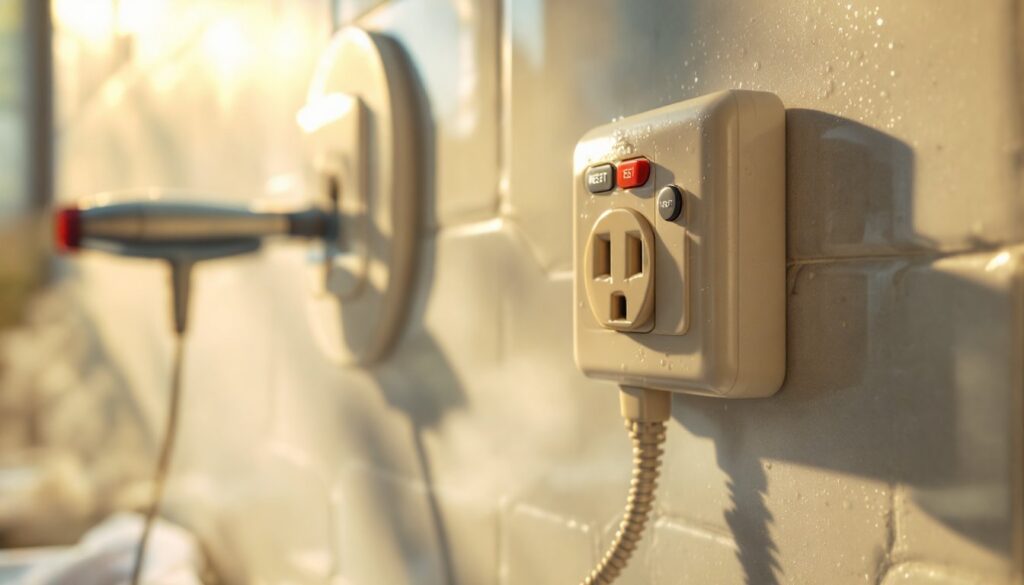
- Check the outlet reset button. If the TEST button (usually red) is already partially pressed or stuck, the outlet is faulty and needs replacement.
Wiring problems are trickier:
If the outlet still trips after replacing it, the issue could be in the wiring inside the wall, a loose connection at the breaker, or a ground fault further down the circuit. These require professional diagnosis. An electrician will use specialized test equipment to trace the fault along the entire circuit.
Ground fault issues can, all things you shouldn’t attempt to fix yourself.
When to Call an Electrician
You’ve tested devices, dried out moisture, redistributed loads, and replaced the outlet. The GFCI still trips. Now it’s time to call a professional. An electrician can perform a megohm test to measure the insulation resistance of the circuit and pinpoint exactly where the ground fault is occurring. This test requires specialized equipment (a megohmmeter) that most homeowners don’t own.
Red flags that demand professional help:
- The outlet trips with nothing plugged in and stays tripped even after replacement.
- Multiple GFCI outlets on the same circuit trip together.
- You notice burn marks, charred wire insulation, or a burnt smell near the outlet.
- The tripping started after a water event (flood, pipe burst, or heavy rain).
- You’re uncertain about opening the electrical panel or testing devices yourself.
GFCI issues often point to deeper problems in your home’s electrical system. If moisture is the culprit, an electrician can also advise on relocating outlets away from wet areas or installing them in drier locations. According to recent home maintenance guides on Today’s Homeowner, persistent electrical issues are one of the top reasons homeowners should invest in a professional inspection.
Electrician fees typically run $100–200 for a service call plus hourly labor ($75–150/hour). A simple fix like replacing wiring or tightening connections might be $150–400. More involved work, like installing a dedicated circuit, could run $300–600 or more. Always get a quote upfront.
Conclusion
A GFCI outlet that keeps tripping is your home’s electrical system raising a red flag. Most of the time, the cause is moisture, a faulty appliance, or an overloaded circuit, all things you can troubleshoot yourself. Start by drying the area, identifying problem devices one at a time, and redistributing high-load appliances. If the outlet still trips after you’ve replaced it and ruled out moisture and device faults, that’s your cue to call an electrician. Ignoring the problem or forcing the outlet to stay on isn’t safe. A tripping GFCI is doing exactly what it’s supposed to do: keep you and your home protected.