Greige kitchen cabinets have quietly become the default choice for homeowners and designers who want neutral cabinetry without boring beige. This hybrid of gray and beige sits in a sweet spot, sophisticated enough to feel current, warm enough to avoid that cold, sterile vibe. Whether you’re planning a full kitchen overhaul or refreshing dated oak cabinets, greige offers flexibility and longevity that trendy jewel tones or stark whites simply don’t. If you’re wondering why greige keeps showing up in modern kitchen renovations, or how to nail the perfect greige kitchen cabinets for your space, this guide walks you through everything from selecting your shade to avoiding common installation pitfalls.
Table of Contents
ToggleKey Takeaways
- Greige kitchen cabinets blend gray and beige to create a sophisticated, timeless neutral that adapts beautifully across modern, traditional, farmhouse, and minimalist design styles.
- Refinishing existing cabinets with greige costs $1,500–$4,000 compared to $8,000–$25,000+ for new cabinetry, making it a budget-friendly way to update your kitchen.
- Always test greige paint or stain samples in your actual kitchen lighting for 24–48 hours before committing, as artificial store lights and phone cameras distort color temperature and undertone.
- Proper preparation—including primer, 120–150 grit sanding, and dust removal—is critical; skipping these steps causes poor adhesion, chipping, and patchy coverage within months.
- Pair greige cabinets with complementary countertops (warm granite with warm greige, cool stone with cooler greige) and backsplash tile that either unifies the palette or provides grounding contrast.
- Use cabinet-grade or trim paint rated for high-traffic surfaces, avoid standard wall paint, and allow 7–14 days full cure time before closing doors to prevent sticking and damage.
What Are Greige Kitchen Cabinets?
Greige is exactly what it sounds like: a marriage of gray and beige. It’s not a watered-down version of either, it’s a deliberate blend that pulls warmth from beige while borrowing the sophistication of gray. The result is a cabinet finish that reads differently depending on the light in your kitchen. In natural daylight, greige leans warm and approachable. Under warm kitchen lighting, it can feel almost taupe. This chameleon quality is precisely why greige works across design styles, from farmhouse and traditional to modern and minimalist.
What separates greige from just painting cabinets a murky gray-brown is the proportion and undertone. A true greige has equal visual weight from both parent colors. It’s not predominantly gray with a touch of warmth, nor is it beige trying to look sophisticated. The best greige kitchen cabinet finishes avoid greenish or yellowish casts that can make the space feel dated or sickly. When you’re shopping for cabinet finishes or paint samples, the undertone matters far more than the name on the can.
Why Greige Is the Go-To Choice for Modern Kitchens
Design Versatility and Timeless Appeal
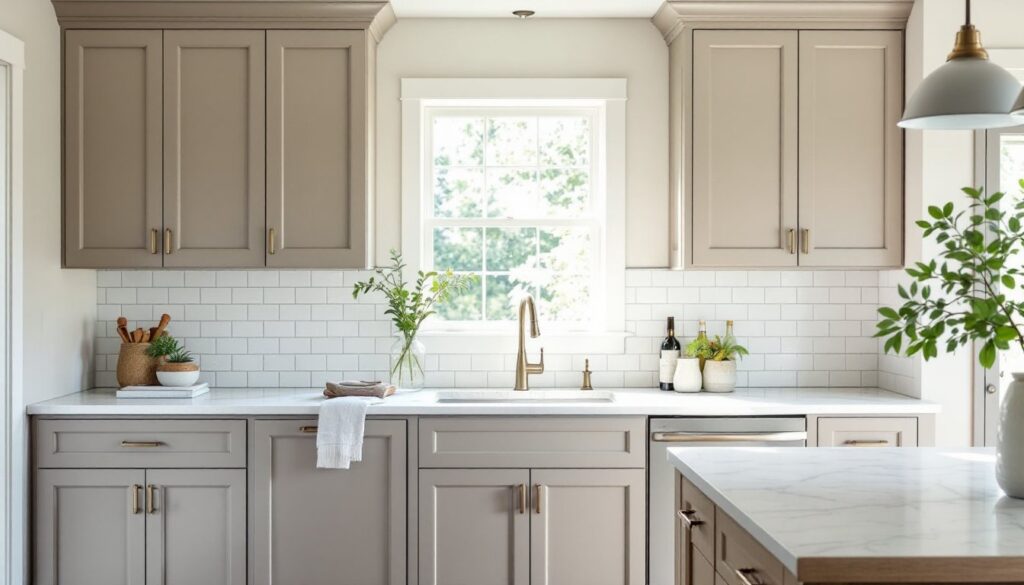
Greige cabinets work because they don’t scream “2026 trend”, they look fresh without feeling like they’ll be cringey in five years. A light greige kitchen cabinets pair beautifully with white subway tile, warm brass hardware, and natural wood islands. The same light greige works equally well with dark granite countertops, modern chrome pulls, and a contemporary backsplash. This flexibility is why interior designers gravitate toward it.
Greige also bridges the gap between different design eras in your home. If your living room leans traditional and your dining area is more contemporary, greige cabinets act as a neutral translator. They don’t force you into a single aesthetic or lock you into one color direction. Perfect greige kitchen cabinets should anchor your kitchen without demanding everything else match a strict palette. When homeowners worry about cabinet color longevity, greige sidesteps those concerns by being genuinely timeless.
Budget-Friendly and Low-Maintenance
Painting existing cabinets greige costs a fraction of a full cabinet replacement. A fresh coat of quality cabinet paint runs $1,500–$4,000 for an average kitchen, compared to $8,000–$25,000+ for new cabinetry. If you’re refinishing existing boxes, the labor is straightforward: proper prep (sanding, filling gaps, priming) and 2–3 coats of cabinet-grade paint. The color is also forgiving, it doesn’t show fingerprints, dust, or minor water spots the way white or true gray does. Greige masks everyday kitchen mess better than its parent colors while still looking intentional and clean.
How to Style Greige Cabinets With Countertops and Backsplashes
Your countertop choice makes or breaks greige cabinetry, so pick materials that complement the warmth or coolness of your specific cabinet shade. Quartz and laminate countertops work reliably because they come in hundreds of patterns, you can match the undertone exactly. Granite and marble introduce natural variation: warmer granites (with rust, peach, or gold flecks) pair best with warmer greige, while cooler stone works with grayer greige. Butcher block or stained wood countertops layer warmth beautifully, especially if your cabinets lean beige-forward.
Backsplash tile is where personality enters. Subway tile in white or cream keeps the focus on cabinetry and counters. Patterned tiles (small geometric mosaics, hexagons, or shaker patterns) add visual interest without competing. Many homeowners using kitchen design inspiration from sources like The Kitchn pair greige cabinets with warm-toned or earth-toned grout to keep the palette cohesive. A high-contrast backsplash (dark gray, navy, or black tile) grounds the space and prevents greige from feeling washed out, especially in kitchens with limited natural light.
Hardware (cabinet handles and knobs) should echo your metal finishes elsewhere. Brushed nickel, satin chrome, or matte black hardware keeps things modern. Warm brass or antique bronze leans traditional. Greige is flexible enough to work with almost any metal finish, just ensure cabinet hardware, faucet, and light fixtures don’t war with each other.
Choosing the Right Shade of Greige for Your Kitchen
Selecting the exact greige shade requires seeing samples in your actual kitchen lighting, not under fluorescent store lights or online. Paint or stain samples must cure fully (24–48 hours) before you judge the true color. Undercured samples appear lighter and may shift once they fully set. Order sample boards from cabinet manufacturers or buy sample quart cans of cabinet paint to test on cardboard or prime plywood. Prop them against cabinet boxes in morning, afternoon, and evening light. This effort prevents the regret of repainting after choosing the wrong undertone.
Kitchens with cool-toned lighting (LED bulbs rated 5000K or higher) pair better with grayer greige. Warm-toned kitchens (incandescent or 2700K LED lighting) suit warmer greige with stronger beige undertones. If your kitchen has limited natural light, lean toward lighter greige shades to prevent the space from feeling dark or cave-like. Darker greige works in naturally bright kitchens or with good artificial lighting to make the space feel cozier.
When comparing design inspiration on platforms like Houzz, remember that phone cameras and monitors distort color temperature. A cabinets photo that looks perfect on your phone might read differently on the wall. Regional humidity and seasonal daylight also affect how greige appears, a cabinet that looks ideal in summer may feel different in winter when sunlight angles change.
Common Mistakes to Avoid When Installing Greige Cabinets
Skipping primer. Painting cabinets directly without proper primer leads to poor adhesion and a finish that chips or peels within months. Use a bonding primer or shellac-based primer designed for cabinet-grade paint on all surfaces, even if paint claims “primer-in-one.” Primer fills grain, seals tannins, and ensures topcoat coverage.
Rushing sanding and prep. Cabinet faces, edges, and inside frames must be sanded with 120–150 grit sandpaper to break the surface gloss, then wiped clean of all dust with a tack cloth. Corners and grooves trap sawdust, compressed air or a brush clears these. Skip this step and paint won’t bond evenly, leaving rough or patchy coverage.
Mismatched paint or stain quality. Use cabinet-grade or trim paint rated for high-traffic surfaces. Standard wall paint (latex or acrylic) isn’t durable enough for cabinet doors that open and close constantly. Water-based cabinet paints dry faster (2–4 hours between coats) but offer less durability than oil-based versions (which cure harder but require mineral spirits cleanup and good ventilation). Semi-gloss or satin sheens hide imperfections better than high-gloss, which exposes every fingerprint.
Not accounting for hardware removal and hinge adjustment. Before painting, remove all hardware, hinges, and shelf pins. Paint them separately or replace with new hardware. After paint cures, hinges may need slight adjustment because the thicker paint layer can affect door alignment. Hinge adjustment screws aren’t obvious, consult your cabinet brand’s spec sheet or ask the installer.
Ignoring ventilation and drying time. Painting cabinets in a closed kitchen traps fumes and slows cure time, especially with oil-based products. Open windows, run exhaust fans, and keep the kitchen unoccupied for at least 24–48 hours after painting. Don’t close cabinet doors until paint fully cures (often 7–14 days for oil-based paint, 48–72 hours for water-based). Premature closing traps wet paint and causes sticking.
When refinishing cabinetry using design inspiration from sources like Home Bunch, measure twice and mock up your layout before committing. A cabinet painter or installer can guide you through material choices and prevent costly do-overs.
Final Thoughts: Making Greige Work for Your Kitchen
Greige kitchen cabinets aren’t a passing fad, they’re a practical, beautiful solution for homeowners who want a kitchen that doesn’t demand constant updating. The color’s neutrality means it adapts to whatever design direction you take next, whether that’s swapping hardware, adding new tile, or refreshing countertops. Start with good samples in your actual lighting, invest in quality paint or finishes, and don’t skip prep work. A properly painted or refinished greige cabinet will outlast any trend and look intentional for years to come. If you’re still uncertain about the shade, consult a designer or visit completed kitchens in person before committing to the color across all cabinet boxes.